
50MM Lens Seascape Photography

Master 50mm lens seascape photography with these essential tips for capturing the ocean's beauty using a standard prime lens. In this video, we explore why the "nifty fifty" is a secret weapon for landscape photography, offering a natural perspective that brings a unique look to your coastal shots.
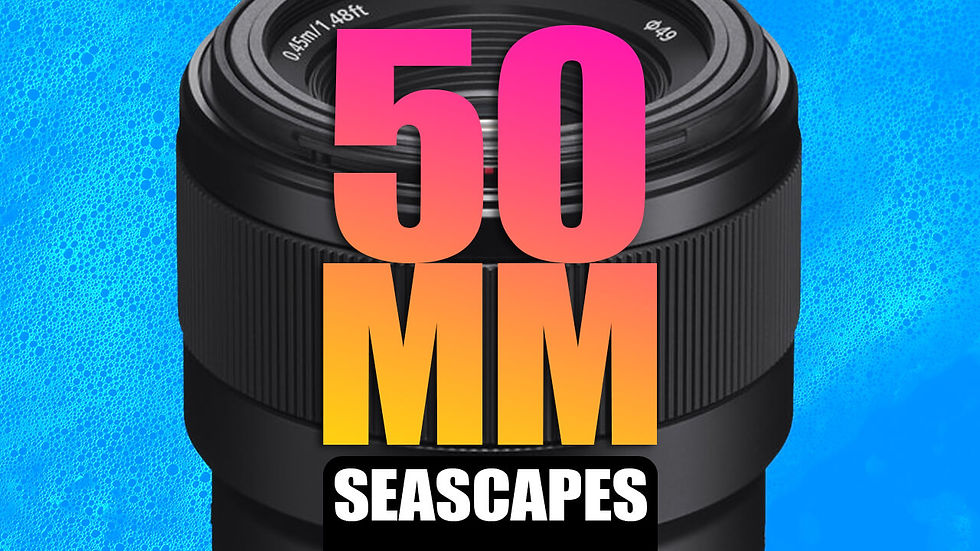
While many photographers reach for wide-angle glass, using a 50mm prime lens for seascapes allows you to isolate subjects, simplify complex coastal scenes, and capture textures like crashing waves or beautiful rocks with minimal distortion. We cover everything from choosing the right camera settings, like using a narrow aperture for deep depth of field, to timing your shoot for the dawn and golden hour light when the light is most dramatic.
Enjoy the tips and images below and be sure to check out the video to see me walk through each, lets get started!
50MM Lens Landscape and Seascape Photography Tips
Arrive early before sunrise to capture great 50mm long exposures without the need for any filters.

As the sun comes up you can increase your shutter speed for different looks.

Put some depth into your 50mm landscape photography. To create depth use the 50mm's natural lens compression and utilize foreground elements to lead your viewer through the scene. If needed focus stack to ensure you have sharpness from front to back as in the example below.

A 50mm lens is an excellent choice when you want to get maximum sharpness in an image. To take it one step further shoot at the lens's sweet spot. Usually about 2-3 stops above wide open. Anywhere from f5.6 to f.8 and be sure to check your specific lens copy as each lens can vary. In the photo below I utilize the 50mm's naturally sharp image and contrast that against the silky water cascades with a 1/4 second shutter.

Once you have plenty of light available, ditch the tripod, go handheld and freeze the action with a faster shutter speed. Try to stay over 1/320 or 1`/500th of a second to freeze the scene. In the example below I waited for the water to crash into the rocks to give a sense of impact and drama.

Going handheld still, get low and use a shallow depth of field to create a sense of immersion.

Finally you get can get some absolutely amazing detail scenes as the morning light plays aginst the water. Take 100 photos and you will have 100 different looking images. I love looking for pockets of light that hit the water, sand and rocks and getting close to capture sharp intimate scenes of the coast. In the images below I upped the shutter to over 1/1250-1/200th of a second to capture the light as it fell and played aginst the moving textures.


Comments