
5 Best CPL Filters for Beginners Landscape Photography (All Budgets)

Updated: Sep 16
What does a Circular Polarizing Filter (CPL) even do? The easiest way to explain is to ask have you ever used polarizing sunglasses? Most people have used them and then quickly understand the effect.
They cut through reflections, darken blue skies, and make foliage pop. If you want to elevate your outdoor photography, a CPL filter is the single best investment you can make. Circular Polarizing filters are essential tools for landscape photography.

Finding the right filter can feel overwhelming with so many options on the market. This guide breaks down five great CPL filters available today, categorized by budget, to help you find the perfect match for your lens. Here are a few of the best CPL Filters for Landscape Photography!

NOTE: If you click on any of the links to check out the filters please verify you have the correct filter thread size! I have linked to 72mm as that is the size I use. You can buy for your largest lens and use step up rings for your smaller sized lenses to save money. More info below.
Some links on this page are affiliate links and I may earn a small commission if you use any. An easy way to support me for free! Thank you!
Why Beginner Landscape Photographers Need a CPL Filter
Unlike digital effects, you cannot replicate the impact of a polarizing filter in editing software like Lightroom or Photoshop. A CPL filter physically changes how your camera lens interacts with light. It reduces glare on water surfaces, manages harsh reflections on wet leaves, and naturally increases color saturation in camera. Much like when you put on a pair of polarizing sunglasses.
The 5 Best CPL Filters for Landscape Photography at Every Budget
1. The Ultra Budget Pick: Neewer Multi Coated CPL Filter

Best for Absolute beginners trying out polarization for the first time.
Price Range: $15 – $25
Key Features: Aluminum alloy frame, high definition optical glass, multilayer protective coatings.
If you are on a very tight budget or just want to experiment with landscape filters, the Neewer CPL Filter is a highly accessible entry point. It utilizes multicoated optical glass to help eliminate up to 99.9% of unwanted reflections from non metallic surfaces like water and glass. While it lacks the advanced color neutrality coatings of more expensive models, it provides an excellent, low risk way for beginners to learn how to manage light in the field.
2. The Stepping Stone Pick: K&F Concept Nano X Series Slim CPL
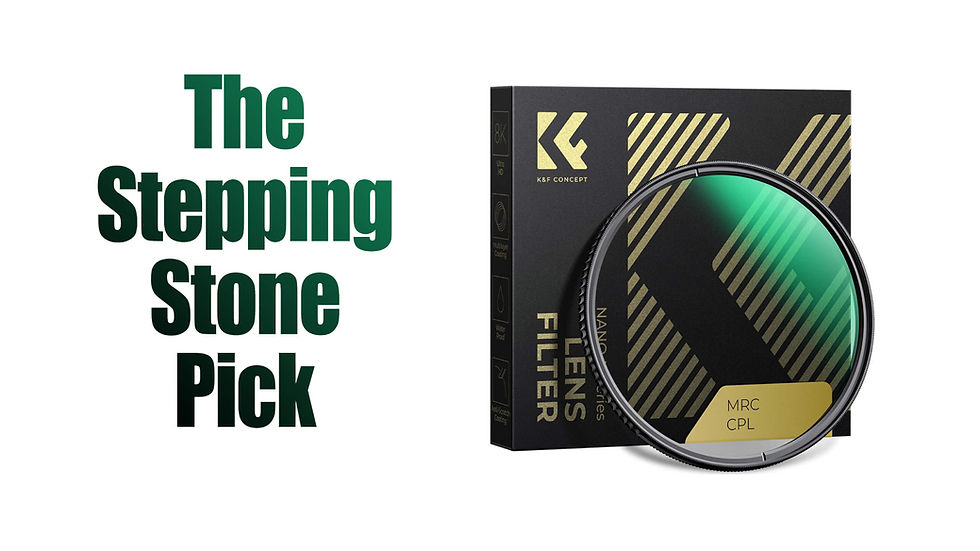
Best for: Amateurs looking for great image clarity and durability without a high price tag.
Price Range: $35 – $60
Key Features: Japanese AGC optical glass, 28 layer nano coating, ultra slim trapezoidal frame design.
The K&F Concept Lens CPL Filter lineup is widely regarded as the ultimate sweet spot for value. The Nano-X series uses premium Japanese optical glass ground to perfection to prevent any loss of sharpness. It stands out with a 28 layer dual sided coating that makes the glass waterproof, scratch resistant, and oil repellent perfect for messy outdoor landscape conditions. Its slim profile frame is engineered specifically to prevent vignetting (dark corners) on wide angle landscape lenses.
3. The Value Pick: Hoya CIR-PL Fusion One Next

Best for: Amateurs wanting high quality without a premium price tag.
Price Range: $60 – $100
Key Features: 18 layer multi coating, stain resistant, water repellent, low profile frame.
Hoya is legendary for creating high quality optical glass at reasonable prices. The Fusion One Next series provides excellent light transmission and minimal color casting. It features an easy to clean coating that repels water droplets and fingerprints. This can be a massive benefit when shooting near windy coastal areas or misty waterfalls.
4. The Eco Conscious Premium Pick: Urth CPL Filter Plus+
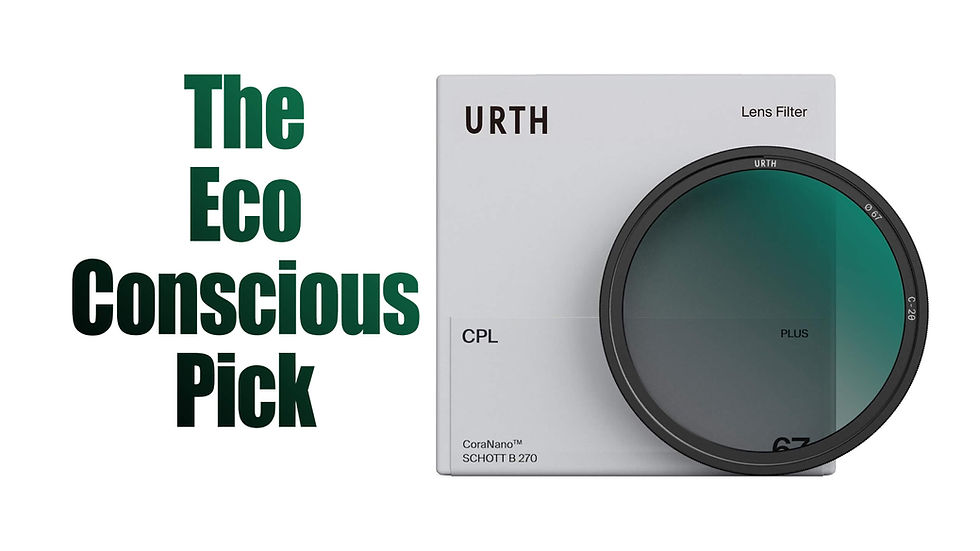
Best for: Enthusiasts wanting professional glass and sustainable manufacturing.
Price Range: $90 – $130
Key Features: German Schott B270 glass, 20 layer nano coating, plants 5 trees per purchase.
The Urth Plus+ line features elite German Schott glass, delivering professional grade sharpness and exceptional light transmission. The 20 layers of nano coating make the glass scratch resistant and incredibly easy to wipe clean during field use. Beyond the optical performance, Urth is a certified B Corp that plants trees for every product sold, making this an great choice for nature loving landscape photographers.
5. The Ultimate Investment Pick: Breakthrough Photography X4 CPL
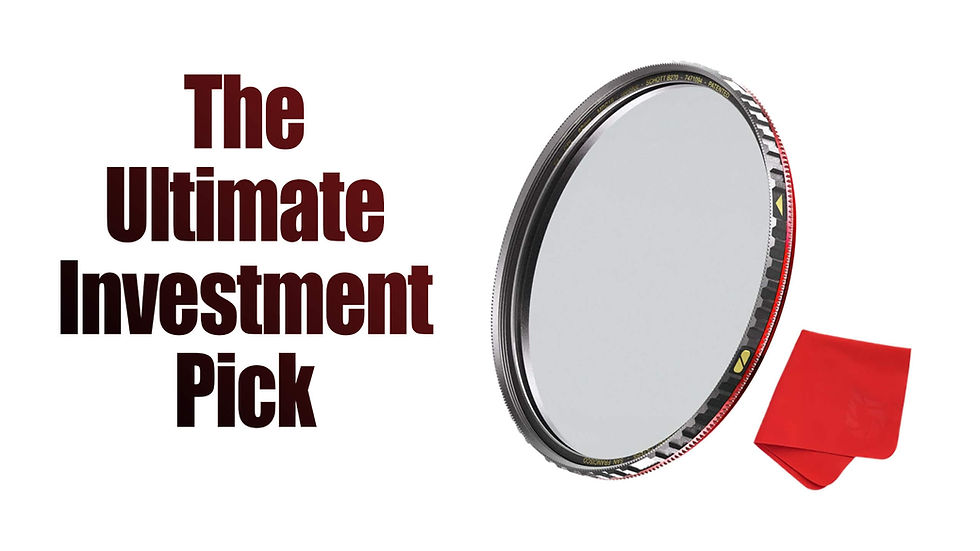
Best for: Beginners with a flexible budget who want the absolute best optical performance.
Price Range: $130 – $180
Key Features: Schott B270 glass, dual threaded brass traction frame, completely color neutral.
If you want to buy a filter once and never worry about upgrading, the Breakthrough Photography X4 is the gold standard. It is widely regarded by professionals as the most color neutral CPL filter in the world, meaning it will not introduce unwanted yellow or blue color shifts into your landscape images. The rugged, textured brass frame is incredibly easy to grip and turn, even if you are wearing heavy gloves during a cold sunrise shoot.
Also check out the Breakthrough Photography X2 CPL to save a little money. It's hard to tell the difference optically, but the X4 does has several very nice to have features if you can swing it.
Price: $70-$100
What do I personally use? I love my Breakthrough Photography X4 CPL. I also use their ND filters, both the X4 and X2 line ar e excellent.

Quick Tips for Buying Your First CPL Filter
Check your thread size
Look at the back of your lens cap or the front of your lens barrel for a millimeter symbol (e.g., ø77mm). Buy the filter size that matches this number exactly. Or...
Consider buying large
If you own multiple lenses, buy a filter that fits your largest lens, and use inexpensive step up rings to adapt it to your smaller lenses. The can be a pain and they are also pretty cheap so I would advise getting 1 solid ring to adapt. Such as a 62-77mm all in piece. Or whichever combination you may need.
Watch your angles
CPL filters work best when your camera is at a 90 degree angle to the sun. Pointing your camera directly at or away from the sun will minimize the polarizing effect. The effect is most pronounced when 90 degrees to the sun or light source and varies as you positioning.
CPL Filter FAQ
Can I leave a CPL filter on my lens all the time?
No, it is not recommended. CPL filters block about 1 to 2 stops of light, meaning your camera gets less light, which can force slower shutter speeds or higher ISOs in low light. Additionally, using a polarizer indoors or at night serves no artistic purpose and will only degrade your image quality.
What is the difference between a linear and a circular polarizer?
Linear polarizers were used for old film cameras. Modern digital cameras use complex autofocus and metering systems that can be confused by linear polarization. Circular polarizers (CPL) include a secondary layer that spins the light, ensuring your camera's autofocus and exposure tools function perfectly.
Why does my sky look uneven or blotchy when using a CPL?
This is a common issue when using a CPL filter on an ultra wide angle lens (like 16mm). Because wide lenses cover a massive expanse of the sky, they capture areas that are naturally polarized differently relative to the sun. To address this, back off the filter's rotation slightly or use a longer focal length.
Do CPL filters reduce image sharpness?
Cheap, poorly made plastic or low quality glass filters can degrade image sharpness and introduce color tints. However, high quality filters like the Breakthrough filters mentioned above use precision ground optical glass that preserves the native sharpness of your lens.
Can I stack a CPL filter on top of a UV or ND filter?
You can, but you should be careful if possible. Stacking multiple filters increases the physical profile on the front of your lens, which creates heavy vignetting (dark corners) on wide angle landscape lenses. Stacking too much glass also increases the chances of ghosting, flare, and reduced contrast. But if the shot requires it then there is no problem stacking ND and CPL. They do make filters that also have both capabilities built in such as the Breakthrough Photography Dark CPL Line.
Thanks for reading! If you have any questions or comments drop them in the comment section below!
Happy shooting!
Check this out next!
---------------------------------------
Some links on this page are affiliate links and I may earn a small commission if you use any. An easy way to support me for free! Thank you!
---------------------------------------
My Stuff
Check out my videos on YouTube and subscribe! Paul Farace Photography
100+ Ideas for Landscape Photographers Book: https://amzn.to/4cinISm
How to Extreme Focus Stack Ebook: https://amzn.to/48wEgon
North East Florida Guide: https://www.paulfaracephotography.com/florida-photo-guide
Marineland Seascape Workshop: https://www.paulfaracephotography.com/marineland

My Gear
My cameras: https://amzn.to/4vgrOTL
My wide angle lens: https://amzn.to/3QfoRTf
My mid range lens: https://amzn.to/4sV4U2y
My telephoto lens: https://amzn.to/48bU687
My drone: https://amzn.to/3PVgdt7
My action cam: https://amzn.to/4t2Knck
My microphones: https://amzn.to/4dE4n0a
My ND filter: https://amzn.to/4c2cLWe
My circular polarizer: https://amzn.to/41XllQ0


Comments