
Anastasia State Park Photography How To Guide

Updated: Aug 14
This is your full guide on everything to do with Landscape and Nature Photography at Anastasia State Park.
Welcome to my "How To Photograph" Florida location series where I will provide all the information you need to have a successful photo shoot in Florida. I will provide information on parking, the best spots, the best timing and lighting, essential gear, settings and pro tips for each specific location!
Let's dive in.
All images and content by Paul Farace Photography
Paul Farace is an award winning Florida based landscape photographer and author with 20 years of experience, specializing in capturing the state's coastlines and waterways. Operating out of St. Augustine, he shares his expertise through fine art prints, adventure videos, educational workshops, and digital content. Explore his work and bio details at Paul Farace Photography.
Some links on this page are affiliate links and I may earn a small commission if you use any. An easy way to support my efforts here for free. Thank you!
Anastasia State Park Photography Guide

Overview
Location: Anastasia Island in St. Augustine, Florida
Park size: 1600 Acres of diverse coastal ecosystems
Park Hours: 8AM to Sundown (Sunrise is accessible, read on)
Description: 4 miles of pristine beaches, dunes and scrubs along the Atlantic Ocean
History
Coquina Quarries: An archaeological site on the National Register of Historic Places where stonecutters mined coquina rock starting in 1671.
The Fort: The mined stone was used to build the nearby Castillo de San Marcos National Monument and other historic structures.

Wildlife and Nature
Ecosystems: Includes scrub hammocks, tidal salt marshes, and ancient sand dunes.
Birdwatching: An excellent to view ospreys, eagles, painted buntings, and roseate spoonbills along Salt Run.
Trails: The Ancient Dunes Nature Trail provides pedestrian access through the park flora and dunes.

Amenities & Recreation
Camping: Features 139 campsites inside the scrub hammocks, just a short walk from the ocean.
Gear Rentals: You can can rent kayaks, canoes, sailboards, and paddle boards nearby. Bicycles and beach gear as well.
Anastasia Park Entry Fees: Vehicle entry is generally $8 (for up to 8 occupants), with lower rates for single occupants ($4) or bicyclists and pedestrians ($2).

What an amazing place to visit. If you are lucky enough to secure a camp spot, congrats! But don't worry if you don't have a camping reservation, because you can still access all of the amazing areas throughout the park.

Parking & Logistics
How to get to Anastasia Island State Park:
On I-95 take exit 311. Head east on State Road 207. Turn right on State Road 312. Turn left on A1A to head north. After 1.5 miles north look for the main park entrance. https://anastasiastatepark.com/home/about-the-park/getting-here/
Once in head to the main beach parking lot - Anastasia State Main Parking Lot Here. (Maps Link)
The park opens at 8AM, but what if you want to photograph sunrise? If you aren't camping then you can't get into the park until it opens, but the beach is always ready.

You might just have to walk a bit extra and there is parking anytime just south near the St. Augustine Pier. A1A Beach Blvd Free Parking Here. (Maps Link) From there it's about a half mile walk north along the coast to Anastasia Beach, where the main park parking lot is located.

The Best Spots to Photograph

Anastasia Beach
Right out from the main parking lot is Anastasia Beach area and even right there things are already beautiful. Explore the beach and dunes in this area.

Bird Island
Just north of Anastasia Beach is the Bird Island section. With over 200 bird species Anastasia State Park serves as a premier destination for bird watching and wildlife photography. A favorite, spoonbills, can be found along Salt Run and migratory shorebirds near the beach.

Conch Island
A bit further north is the Conch Island area. Amazing dunes, wildlife and coastal scrubs throughout.

Cape Francis
Cape Francis is situated at the northern tip of Conch Island along the St Augustine Inlet. Quite a long walk out to here, but some amazing landscapes and views!
Salt Run and Salt Run Beach
Salt Run is a 3 and half mile tidal lagoon extending south from the St Augustine Inlet to the eastern side of Anastasia Island. This entire stretch is a favorite for wildlife photographers. Salt Run Beach is near the north west end.

The Best Timing and Lightning
This place is pretty magical so the window to shoot is kind of open. The only "bad" times are during mid day harsh sun, but even then creativity can easily overcome. The heat will usually get you before the light gets unfavorable too.

Sunrise and sunset are of course favorites, just plan accordingly because you will be walking in the dark either out or back in. Luckily that is pretty easy along the beach. A beautiful walk too. Just watch out for the migratory shore birds during nesting season, they will dive bomb your head as they did mine several trips!

Essential Gear and Camera Settings
Besides your camera and lenses if you only bring one extra piece of gear, let it be a circular polarizing filter. This will help you cut through any glare, harsh sun, water highlights and so on. Almost essential in this environment.
My Circular Polarizing (CPL) Filter - Breakthrough Photography X4 CPL
Related Article: 5 Best CPL Filters for Beginners Landscape Photography (All Budgets)
Along with the CPL, ND filters are great to have if you want to photograph moving water and control your shutter speeds, such as in the photo below of the St. Augustine Pier.
My Neutral Density (ND) Filter - Breakthrough Photography X4 6 Stop
Related Article: 5 Best ND Filters for Beginners Landscape Photography (All Budgets)
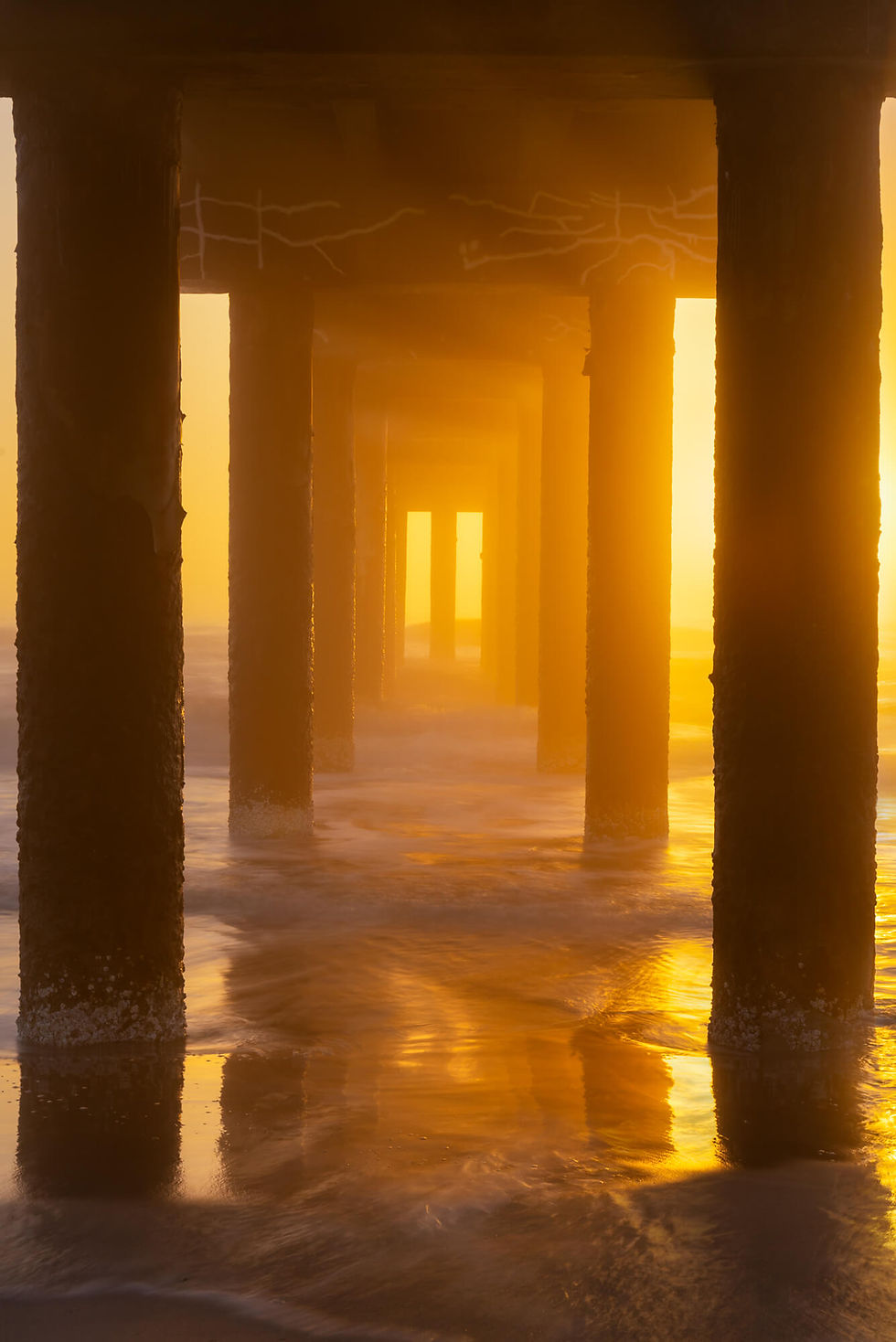
If there is one thing that will secretly ruin your photos it's the humidity. For starters you MUST let your gear acclimate to the outside environment for at least 15-20 minutes before taking any serious photos.
But when your lens inevitably fogs up and gets all gunky, there is only one thing that can help and that is a Lens Pen. Essential.
Lens Pen Kit - https://amzn.to/3PdZMYO

And I couldn't let it go without at least mentioning a solid tripod, essential for landscape photographers.

Anastasia State Park Local Pro Tips
Explore the water - Bring or rent a kayak to really explore Salt Run, especially for wildlife photographers.
Lighthouse shots - You can get excellent lighthouse photos from all along the park with a telephoto lens. Great for sunsets.
Arrive early - Or stay late to shoot the pier during blue hour if you are parking out that way. A great bonus shot!
Keep your lenses clean - Let them acclimate before shooting, have your lens pen always ready and try to minimize lens switching.
Fishing shirts are great - Longe sleeve fishing shirts cover your arms from the sun, bugs and are light weight. They also double as a head net and bug swatter if you aren't wearing it. If you follow any of my YouTube adventures you will know what I mean!

Safety, Conservation and Etiquette
Sun protection is a must. I don't use a lot of sunscreen and prefer to cover myself up. Like I just mentioned, I bring love sleeve light weight shirts, like these fishing shirts. They will help block the extreme sun and also keep the bugs at bay.
And speaking of bugs the noseeums, gnats or midges, can be overwhelming for certain periods to the day. Which happen to be some of the best times for landscape and nature photography too.
I would HIGHLY suggest having a head net, like these here. You may not need it, but if you do you will be remembering this article and thanking me haha! Grab a cheap 2 pack and stick one in your bag, they take up almost no room.
I prefer the hunting style ones, such as these, with a wired eye piece. So you can still see in lower light, but still have 90% protection.
Leave it better than you found it! Never trample the dunes and try not to disturb any wildlife. If you come across some trash or debris, grab it, bring it back and throw it away!
Anastasia Island Photography FAQ
Q: How much does it cost to enter the park for a shoot?
A: Regular park admission fees apply. It costs $8 per vehicle (2–8 people) or $2 for pedestrians and bicyclists.
Q: Can I access the park for a sunrise photo shoot?
A: The park opens daily at 8:00 AM and closes at sundown. Sunrise access is generally restricted to registered campers staying at the park campground. Sunset/golden hour shoots are highly accessible before gates close. For sunrise, see my info above for a workaround.
Q: Are drones allowed for aerial beach photography?
A: No. Drones are strictly prohibited inside Florida State Parks.
Q: What environmental hazards should I prepare for?
A: Salt spray and fine, windblown sand are constant threats to your lenses and camera sensors. Bring a high-quality lens brush, a lens pen and plenty of microfiber cloths. A sturdy tripod is also essential, as the coastal winds off the Atlantic can cause noticeable camera shake during longer exposures.
Q: Are tripods, stands, and other gear permitted?
A: Yes. Hand carried equipment that does not block public walkways or require staking into the ground is perfectly fine to use.
Q: How harsh are the summer months for outdoor shoots?
A: Summer (June through August) is very hot and highly humid. July and August average daily highs around 89°F to 90°F, with early morning lows staying sticky near 75°F. Landscape photographers should prepare for frequent, sudden afternoon thunderstorms and high atmospheric haze during these months.
Q: What are the best months for mild weather photography?
A: Spring (March to April) and late fall (October to November) offer the most comfortable shooting conditions. March brings average highs of 74°F and lows of 56°F, while April warms to a high of 78°F. October sees pleasant highs around 81°F dropping to near 67°F after sunset, making it ideal for evening golden hour shoots without extreme humidity.

Here are some more articles to check out next:
And
Here are some videos to check out:
Thanks for reading! Drop me a comment if this helped you out!
Paul Farace
Paul Farace is an award winning Florida based landscape photographer and author with 20 years of experience, specializing in capturing the state's coastlines and waterways. Operating out of St. Augustine, he shares his expertise through fine art prints, adventure videos, educational workshops, and digital content. Explore his work and bio details at Paul Farace Photography.
---------------------------------------
My Stuff
My Website: https://www.paulfaracephotography.com/
100+ Ideas for Landscape Photographers Book: https://amzn.to/4cinISm
How to Extreme Focus Stack Ebook: https://amzn.to/48wEgon
North East Florida Guide: https://www.paulfaracephotography.com/florida-photo-guide
Marineland Seascape 1on1 Guide: https://www.paulfaracephotography.com/marineland
My Gear
My cameras: https://amzn.to/4vgrOTL
My wide angle lens: https://amzn.to/3QfoRTf
My mid range lens: https://amzn.to/4sV4U2y
My telephoto lens: https://amzn.to/48bU687
My drone: https://amzn.to/3PVgdt7
My action cam: https://amzn.to/4t2Knck
My microphones: https://amzn.to/4dE4n0a
My ND filter: https://amzn.to/4c2cLWe
My circular polarizer: https://amzn.to/41XllQ0

Comments