
How to Start Landscape Photography: A Beginner’s Guide

Have you ever wondered how to capture amazing nature and landscapes moments? Do you already take a million sunset photos on your phone?
If you have ever asked yourself "How do I start landscape photography?" you have come to the right place!

Landscape photography allows you to freeze those breathtaking natural moments. Stepping into the field with intention for the first time can feel a bit overwhelming. You don't need expensive, top tier camera gear to capture stunning photos. Success lies in mastering light, composition, and being prepared for when the magic happens.

All images by Paul Farace Photography
Paul Farace is an award winning Florida based landscape photographer and author with 20 years of experience, specializing in capturing the state's coastlines and waterways. Operating out of St. Augustine, he shares his expertise through fine art prints, adventure videos, educational workshops, and digital content. Explore his work and bio details at Paul Farace Photography.
Some links on this page are affiliate links and I may earn a small commission if you use any to buy. An easy way to support me for free! Thank you!
How to Start Landscape Photography
Here is how to build your foundation and start capturing amazing outdoor imagery.
Master the Essential Gear
Camera, Tripod and lenses.

TLDR: Get a decent camera, DSLR or Mirrorless. Get a carbon fiber tripod. Wide and Telephoto lenses are best.
You do not need a high end budget to start or to even create world class images, but a few key tools will drastically improve your photos.
Any modern camera:
Using a basic DSLR or mirrorless camera where you can also change lenses will greatly improve your image quality immediately, but even a smartphone will work to get started.
Using a phone? Watch This: Take Epic Long Exposure Beach Photos with Your Phone!
You essentially have two main options, and stay with me here, APSC and Full Frame. This means the size of the camera sensor that captures the image. Full frame cameras cost more and offer some advantages, but APSC and other smaller sensors take amazing images too.
Which one you choose will determine which lenses you can get down the road.
Full Frame VS Crop Sensor
To make things more confusing APS-C has what is called a crop factor, around 1.5x. So a 10mm lens would look like what is considered 15mm on Full Frame. 100mm, looks like 150mm lens. This can be a huge benefit with longer telephoto lenses. A 300mm now feels like a 450mm...So there are pros and cons to using either, but if you can afford it with no problems, go full frame. For the best low light performance and image quality.
I started with an APS-C, the Canon T21 or 550D to be exact. I eventually moved over to Sony full frame and got the Sony A7iii. I still shoot 2 of those cameras to this day!
APS-C Sensor Cameras
Canon Camera: https://amzn.to/4f8fT3a
Sony Camera: https://amzn.to/4wAl96E
Nikon Camera: https://amzn.to/3SNNE2c
Full Frame Sensor Cameras
Sony Camera: https://amzn.to/4f6b9em
Canon Camera: https://amzn.to/3TahJsK
Nikon Camera: https://amzn.to/4vT4mLY
Don't be afraid to go used! You can save a ton of money buying an older camera, just make sure it's from a reputable person or dealer such as MPB. And check the shutter count. Even a 20 year old camera can still take amazing photos. Don't let the price tag of new camera gear scare you off.
A sturdy tripod:
Eliminates camera shake during long-exposure and telephoto shots.
A tripod is essential to get many of the creative landscape photos we all love. Often you are shooting in very low light during dusk and dawn. You will need some camera support to level up! I would suggest getting carbon fiber over aluminum due to rust and the much lighter weight.
Budget Tripod (I use this one): https://amzn.to/4eXzbYE
Mid Range Tripod: https://amzn.to/3SVWCKI
High End Tripod: https://amzn.to/4fpRLdw
A Wide Angle Lens:
Captures expansive views and dramatic foreground. (14mm to 35mm range).
Wide Angle Lens Image Gallery
Wide Angle Seascape in Marineland Florida Wide Angle Lightning photo from St Augustine Florida Get close with your wide angle lens Crop for an even wider feeling in your photos A beached sailboat in Flager County A wide angle view of Ponce Inlet from New Smyrna Sand Dunes Park.
I personally use a prime wide angle which costs significantly less than a wide angle zoom for the faster aperture ( f1.8 for night and astrophotography), but having the flexibility of a zoom is great. Luckily these days we have plenty of choices when it comes to third party lenses. You no longer have to drop $2000+ to access great optics.
Just keep in mind what you want to shot. If you only shoot landscape f4 is plenty and cost less. If you want to shoot low light scenes now or in the future, consider a faster aperture of at least f2.8.

Here are some great third party wide angle lenses.
APS-C Wide Angle Lenses
Tamron 11-20mm f2.8: https://amzn.to/4fp7pWu
Tamron 17-70mm f2.8: https://amzn.to/44SK3T1
Viltrox 9mm f2.8: https://amzn.to/4vWpTDR
Full Frame Wide Angle Lenses
My wide angle lens 16mm f1.8: https://amzn.to/4wqxN80
Viltrox 14mm f4 (only $199 new): https://amzn.to/4pemVI8
Tamron 17-28mm f2.8: https://amzn.to/3SIUu9d
Samynag 14mm f2.8: https://amzn.to/4wd8irr
A telephoto lens:
Isolates distant mountain peaks or patterns in nature (70mm to 200mm and longer).
Telephoto Lens Image Gallery
Telephoto Panoramic shot of the Blue Ridge Mountains. Isolate subjects in the fog with your telephoto lens. Don't forget the details! Get details with your telephoto. Telephoto image from the Blue Ridge Mountains. Compress the scene with your telephoto lens. Isolating distant subjects can create clean images.
It took me way too long to get a telephoto lens. For the longest time I used my trusty Tamron 28-75mm (that I got for photographing weddings) for almost everything beyond wide angles. I can say this with confidence. Get a telephoto when you can.
It opens up a world of fun chasing light, patterns and isolating subjects to create art in nature.
You don't have to spend an arm and a leg. My telephoto lens was only $360 new, on sale from $399. I think it's only $370 new now!
Telephoto Lenses
Tamron 70-300mm: https://amzn.to/4ydnshE
Canon RF 100-400mm: https://amzn.to/4wAdp4x
Tamron 150-500mm: https://amzn.to/4ph2oCW
Tamron 50-400mm: https://amzn.to/4wyXjIf
Don't forget you can almost always use full frame lenses on APS-C cameras of the same system! Get more reach!

Chase the Right Light
Golden hour, blue hour and the right weather.
TLDR: It's all about the light. Learn the different times of day and take advantage of changing weather.
It's all about light.
Lighting dictates the mood, depth, and color of your landscape images. Midday sun creates harsh shadows, so aim for these optimal times.
Blue Hour:
The 30 minutes before sunrise and after sunset provides deep, moody blue tones.
Golden Hour:
The hour after sunrise and before sunset offers warm, soft light.
Overcast Days:
Soft, diffused light acts like a giant softbox, perfect for waterfalls and forests.
Storm Light:
Dramatic and constantly changing, storm light is some of my favorite conditions.
Image Gallery: Different Lightning Conditions
Blue Hour can create ethereal images. Catch god rays when there is thick fog. Overcast blue hour in Big Talbot State Park. Spot lighting on Moore Cove Falls. Storms at Sunset bring amazing opportunities. Soft light and fog create a painterly look. Ocean storms offer amazing skies. Lightning can be amazing to capture, but be safe! Sunrise in Marineland.
Compose with Intention
Rule of Thirds, Leading Lines & Foreground interest.
TLDR: Learn these basic composition rules to strat creating compelling images. Rule of Thirds, Leading Lines and Including foreground interest.
Composition guides the viewer's eye through your photograph. Instead of just placing the horizon directly in the middle, try these classic techniques.
Rule of Thirds:
Divide your frame into a perfect 3x3 grid. Place key elements like trees or any interesting subject along these lines.
Leading Lines:
Use roads, rivers, or fences to draw the eye from the foreground into the horizon.
Foreground Interest:
Place a rock, flower, or interesting subject close to the lens to add depth and scale.
Image Gallery: Composition Examples
Rule of Thirds. Leading lines & foreground interest. Close foreground interest adds depth to your images.
Scout and Prepare Safely
Weather Apps, Safety Essentials & Leave No Trace.
TLDR: Scouting is half the battle. Learn how to read your weather apps to predict the conditions. Always stay safe and leave no trace on every photo shoot.
Weather & Planning Apps:
Use multiple weather and planning apps to track cloud cover, storm fronts, and fog before you leave.

MyRadar (Live radar): https://myradar.com/
ClearOutside (Forecast): https://clearoutside.com/
PhotoPills (Planning): http://www.photopills.com/
Scout Digitally:
Utilize satellite maps to locate viewpoints and parking spots ahead of time, but don't replace that with real boots on the ground scouting too.

Watch: How I Scout Photos
Find epic landscape photography close to home. Want to know how I scout photos? Do you want to turn local landscape photography into timeless art? Well first you have to find it! And you can find amazing photos almost anywhere.
Pack safety essentials:
Bring layers of clothing, headlamps, bug head net, extra water, and offline maps if hiking far.
Great Headlamp: https://amzn.to/4eUuiS7
Bug Head net (gnats, noseeums and midges): https://amzn.to/4gvt4gQ
Thermacell (only thing that works with mosquitoes): https://amzn.to/4gphljQ
Permethrin (treats clothes/kills ticks on contact): https://amzn.to/44n8EiH
Leave No Trace:
Always respect the environment by staying on trail and packing out trash.
Rule number 1, GET OUT THERE!
You can't create amazing photos sitting on the couch so get up and head out. Before you know it you will be finding amazing light.
Thanks for reading!
Check out these articles next!
How To Start Landscape Photography FAQ:
What is the best camera setting for landscape photography?
Start with Manual mode, set your ISO to 100 for maximum image quality, and use an aperture between f/8 and f/11 to keep the entire scene in focus. Then use shutter speed to dial in your exposure.
Do I really need a tripod for landscape photos?
Yes, a tripod is essential because it stabilizes your camera during slow shutter speeds, especially during low light hours like sunrise and sunset. That doesn't mean you HAVE to use it all the time.
Can I shoot great landscape photos on a smartphone?
Absolutely, modern smartphones have advanced sensors and ultra wide lenses that work perfectly for landscapes when using pro mode and shooting in RAW format. (see my phone photography video here)
What lens should a beginner buy first?
A wide angle lens should be the first lens you get. You don't have to spend a fortune. (check out this video on wide angle lenses)
How do I find good landscape photography locations near me?
Use satellite imagery on digital maps, browse local photography hashtags on social media, or explore hiking apps to find scenic viewpoints. (Watch: How I Scout Photos)
---------------------------------------
Check out my THIS IS FLORIDA! series on YouTube where I am exploring the full length of Florida's A1A in search of the best landscape photography spots.
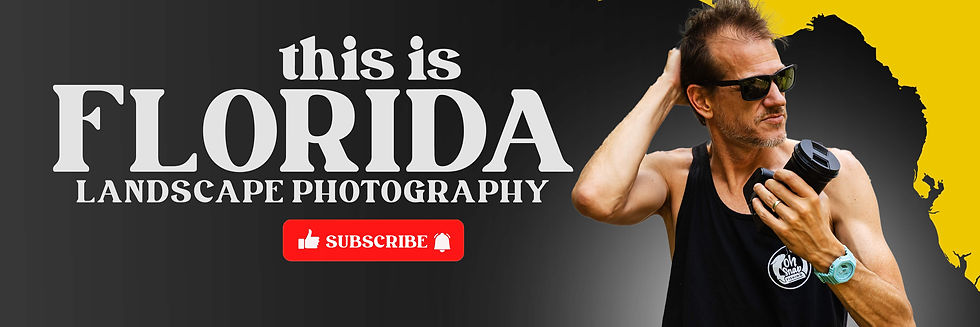
This Is Florida! Watch The Series Here!
My Stuff
100+ Ideas for Landscape Photographers Book: https://amzn.to/4cinISm
How to Extreme Focus Stack Ebook: https://amzn.to/48wEgon
North East Florida Guide: https://www.paulfaracephotography.com/florida-photo-guide
Marineland Seascape Workshop: https://www.paulfaracephotography.com/marineland
My Gear
My cameras: https://amzn.to/4vgrOTL
My wide angle lens: https://amzn.to/3QfoRTf
My mid range lens: https://amzn.to/4sV4U2y
My telephoto lens: https://amzn.to/48bU687
My drone: https://amzn.to/3PVgdt7
My action cam: https://amzn.to/4t2Knck
My microphones: https://amzn.to/4dE4n0a
My ND filter: https://amzn.to/4c2cLWe
My circular polarizer: https://amzn.to/41XllQ0


Comments